
Volume 2 • Issue 1 • January 2025
Pages 12-18
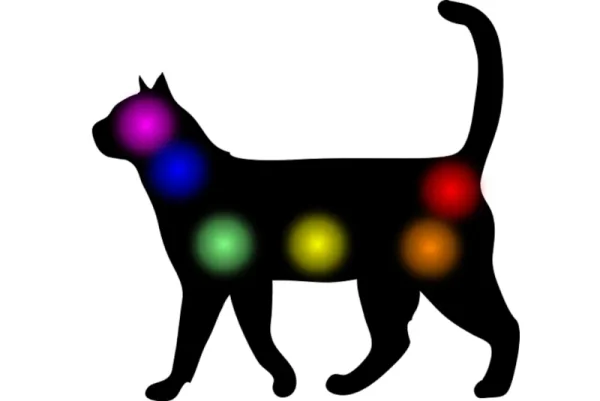
Understanding Your Pet’s Chakra System
How seven main chakras – plus animal-only energy centres – shape your pet’s behaviour, health and emotional world
By Sharon Burnett • Animal Communication for Healing • 10 min read
J
ust as humans have a network of chakras running through the body, our animals do too – with a twist. Your pet has the same seven main energy centres you do, plus additional chakras that exist only in animals. When you start to look at behaviour, health issues and sensitivity through this lens, a lot of “random” patterns suddenly become much more readable.
Many guardians come to chakra work when they’ve tried everything else. The vet says the tests are normal. The trainer has done what they can. But their animal is still anxious, reactive, withdrawn, clingy or overwhelmed. When we look at what’s happening energetically—not just behaviourally—we often see a chakra system that is overworked, depleted, or carrying too much emotional load for the household.
Chakras don’t replace veterinary or behavioural care. They sit beneath those modalities, helping us understand why your animal reacts the way they do, where their system is compensating, and what kind of gentle support will help them feel safe again.
🔬
Science Spotlight – The Body Has an Energy Field
Modern research in biofield physiology describes the body as surrounded and interpenetrated by a dynamic field of electromagnetic and subtle energies (Rubik et al., 2015; Hammerschlag et al., 2015).
This field isn’t metaphorical — it is measurable. It carries information, responds to environment, and reflects states of stress, regulation, and wellbeing.
Chakras fit within this emerging framework as organised centres within that field, influencing how energy flows through the body. Science isn’t proving chakras —
it’s simply catching up to what ancient traditions and animal guardians have always known: the body is energetic as well as physical.
Root • Sacral • Solar Plexus • Heart
The Foundation Chakras
These chakras form the energetic “base layer” of your animal’s wellbeing. When they are steady, your pet feels secure, emotionally stable and physically grounded. When they are not, the signs show up long before anything appears in bloodwork.
Root Chakra
Base of spine / hindquarters
Safety • Grounding • Stability • Survival needs
A balanced Root chakra helps your pet feel secure in their home, routine and relationships. Imbalances can manifest as reactivity, fearfulness, nervous toileting, resource guarding, hyper-vigilance or difficulty settling. Rescue animals commonly carry deep Root depletion from previous instability or trauma.
Sacral Chakra
Lower abdomen / reproductive area
Emotion • Play • Connection • Sensory comfort
This chakra governs emotional expression, playfulness, affection and reproductive health. When disrupted, your animal may become shut down, over-groom, struggle with reproductive issues, avoid certain kinds of touch, or develop compulsive patterns.
Solar Plexus Chakra
Upper abdomen / diaphragm
Confidence • Boundaries • Digestion • Autonomy
Your animal’s sense of confidence and personal power lives here. A balanced Solar Plexus chakra supports digestion, self-assurance, and appropriate boundaries. Imbalances may show up as chronic gut issues, submissiveness, “people-pleasing” behaviour, irritability, or sudden emotional outbursts.
Heart Chakra
Centre of the chest
Bonding • Empathy • Love • Grief • Connection
When your animal’s Heart chakra is open, they bond deeply and safely — without becoming overly dependent.
Imbalances may show as separation anxiety, clinginess, withdrawal, grief-related shutdown, or difficulty forming new attachments.
Research Insights
Key Takeaways
- Pets often mirror your emotions through behaviour and body signals.
- Emotional mirroring is unconscious, loving — never blame.
- Dogs generally mirror intensity; cats often mirror emotional tone.
- Your stress patterns often affect your pet’s emotional regulation.
- Healing is shared — you shift, your animal shifts.
Where Balanced Energy Becomes Pure Joy
When your pet’s chakras flow freely, their whole world opens — ease, trust, playfulness, and the simple happiness of being together.
🔬
Science Spotlight — The Heart Radiates a Real Field
The human heart produces an electromagnetic field thousands of times stronger than the brain’s magnetic output (McCraty & Childre, 2010). Animal hearts produce similar fields relative to their size.
These fields:
extend well beyond the body
change with emotional and physiological state
influence internal coherence and regulation
Energetically, this mirrors the Heart chakra’s role as a central hub of connection and relational safety.
Throat • Third Eye • Crown
The Higher Consciousness Centres
These chakras relate to intuition, connection and your animal’s ability to sense the world beyond the physical cues humans rely on.
Throat Chakra
Throat and neck
Expression • Communication • Truth
Animals express themselves through energy, posture, vocalisation and behaviour.
An imbalanced Throat chakra may appear as:
excessive barking or meowing
sudden silence
swallowing difficulties
neck tension
avoidance of collars or harnesses
Third Eye Chakra
Between the eyes
Intuition • Perception • Subtle sensing
Animals naturally have a more open Third Eye chakra than humans.
This is why many can:
detect storms or earthquakes
sense tension in a room
avoid “energetically heavy” spaces
become alert to someone’s intention before they act
Crown Chakra
Top of the head
Spiritual awareness • Higher connection • Wisdom
This chakra is rarely blocked in healthy animals. It supports their natural sense of purpose, guidance and connection to something beyond the physical world.
Many guardians describe these animals as “old souls” or “teachers in fur.”
🔬
Science Spotlight — Animals Perceive Beyond the Human Spectrum
Many species detect magnetic fields, infrared patterns, barometric pressure changes, ultrasonic frequencies, and subtle environmental shifts far beyond human sensory capacity (Dawson et al., 2021).
This expanded perception mirrors the intuitive, environmental and navigational themes associated with the Third Eye and Bud chakras.
Brachial Chakra • Bud Chakras
The Animal-Only Chakras
Animals possess two energy centres humans do not. These chakras explain many behaviours that are intuitive to guardians but poorly explained by behaviourism alone.
Brachial Chakra
In front of the shoulders
Human–animal bond • Service • Healing connection
This chakra governs the deep energetic connection between animals and their humans.
It is active when your pet stays close to you when you’re unwell, follows you from room to room, or offers comfort instinctively.
Overload often occurs in sensitive animals who feel responsible for the emotional tone of the home.
Bud Chakras
In the pads of all four paws
Grounding • Navigation • Environmental intuition
These mini-chakras connect your animal to the Earth. They help them:
navigate
discharge stress
sense natural changes
read energetic patterns in environments
Indoor pets often become calmer and more centred with regular bare-paw Earth contact.
Your pet isn’t copying your behaviour — they’re responding to your nervous system.
The Moment You Realize You're Not Imagining It
There’s a reason your animal is acting differently.
There’s a reason you can’t shake the feeling something’s “off.” Your pet is communicating through energy long before behaviour ever changes.
If you’re reading this and your chest feels tight, warm, or unsettled…
that’s your intuition responding.
And it’s your animal asking for clarity, not chaos.
In this 30-minute call, we’ll discuss your animal’s specific situation and whether animal communication is right for you.
SIGNS & SYMPTOMS
How Chakra Imbalances Appear in Everyday Life
Signs your pet’s energetic system needs support may include:
fearfulness or avoidance without clear triggers
sudden behavioural “shutdown”
digestive flare-ups during stress
agitation in specific rooms
clinginess with one person only
compulsive licking or grooming
inability to settle or sleep
intolerance to touch around certain chakras
These are not behavioural “faults.” They are energetic communication signals.

GENTLE HOME SUPPORT
Gentle Ways to Support Your Pet’s Chakras at Home
You don’t need to be an energy healer to help your pet. Small, consistent practices often create profound shifts.
1. Regulate yourself first – Animals respond strongly to the energetic climate around them. Three deep breaths, softening your shoulders and grounding your feet can help settle your animal’s system too.
2. Create predictable routines – The Root chakra thrives on safety and stability.
3. Use intentional, consent-based touch – Slow, gentle touch along the spine, shoulders and paws can rebalance multiple chakras at once.
4. Colour support
Red for grounding
Orange/yellow for confidence
Green for heart connection
Indigo/purple for intuition
5. Sound healing – Soft frequencies, humming, singing bowls or gentle music can help regulate the energetic body.
6. Crystal support – Place crystals such as clear quartz, rose quartz or amethyst near your pet’s resting area.
The strongest chakra medicine your animal has is your presence, your steadiness and your intention.
WHEN TO SEEK GUIDANCE
When It’s Time to Ask for Professional Help
Some challenges benefit from deeper energetic intervention, especially when:
Trauma histories run deep
Chronic issues persist without clear medical cause
Behaviour has escalated beyond training alone
Your animal carries emotional load for the whole family
End-of-life support is needed for peace and comfort
Professional chakra work and animal communication offer a way to identify where the imbalance sits and how to gently restore harmony.
SOUL-LEVEL CONNECTION
The Journey of Energetic Partnership
Understanding your pet’s chakra system shifts the relationship from “fixing a problem” to walking together as energetic partners. As their chakras rebalance, guardians often notice their own energy softening too.
Your animal doesn’t need perfection from you—just presence, curiosity and gentle, ongoing support.
If you want clarity on what your pet’s chakra system is trying to communicate, a free Clarity Call can help you understand what’s happening beneath the surface and what your animal needs to feel safe and grounded again.
Bring Your Pet’s Chakras Back into Harmony
Your animal’s chakras don’t fall out of alignment at random.
There’s always an energetic story underneath — emotional overload, unresolved imprinting, a shift in your home environment, or the simple truth that your pet has been carrying more than their system can hold.
If you’ve felt that something deeper is driving their behaviour or discomfort, you’re likely right. And you deserve clarity — grounded, compassionate, and free from guesswork.
Together, we’ll explore whether chakra work is the pathway that brings your animal (and you) back into harmony.
In 30 minutes, we’ll explore what your pet’s energy is signalling — and whether a Quantum session focusing on chakra work is the right pathway for both of you.

About Sharon Burnett
Quantum Healing Facilitator, Qualified Life Coach, Hypnotherapist, NLP Trainer & Meditation Teacher
I’m a Qualified Life Coach, Hypnotherapist, NLP Trainer & Quantum Healing Facilitator and i help people understand the deeper spiritual connections with their animals.
I bridge the gap between science and intuition, between veterinary care and energy healing, between what we can see and what we can feel.
If you’re struggling to understand your pet’s behavior, their health issues, or just the purpose of your bond—I can help.
My work combines consciousness-based animal communication with practical, real-world support. No fluff. No judgment. Just clarity, compassion, and actionable guidance.
Because your animal chose you for a reason.
Let’s figure out what that reason is.
References & Resources
-
- Rubik, B., Muehsam, D., Hammerschlag, R., & Jain, S. (2015). Biofield science and healing: History, terminology, and concepts. Global Advances in Health and Medicine, 4(Suppl), 8–14.
-
- McCraty, R., & Childre, D. (2010). Coherence: Bridging personal, social, and global health. Alternative Therapies in Health and Medicine, 16(4), 10–24.
-
- Walker, M. M., Dennis, T. E., & Kirschvink, J. L. (2002). The magnetic sense and its use in long-distance navigation by animals. Current Opinion in Neurobiology, 12(6), 735–744.
-
- Gee, N. R., Mueller, M. K., & Curl, A. L. (2021). Human–animal interaction and wellbeing: Dogs as supportive partners. Frontiers in Veterinary Science, 8, 630465.
-
- Clark, S. D., Smidt, J. M., Bauer, B. A., et al. (2020). The impact of a 20-minute animal-assisted activity session on the physiological and psychological health of adults. Mayo Clinic Proceedings, 95(11), 2449–2460.
-
- Porges, S. W. (2011). The Polyvagal Theory: Neurophysiological Foundations of Emotions, Attachment, Communication, and Self-Regulation. New York: W. W. Norton & Company.