 Skip to content
Volume 2 • Issue 1 • January 2025
Pages 12-18
Do Pets Mirror Their Owners? Emotional Mirroring in Animals Explained
How your stress, mood, and emotional state shape your pet’s behaviour — and how to heal together without blame.
By Sharon Burnett • Animal Communication for Healing • 10 min read

I
f you’ve ever wondered “Do pets mirror their owners?”, “Is my anxiety affecting my dog?”, or “Do my emotions affect my cat?”, you’re not alone. Emotional mirroring is one of the most powerful — and most misunderstood — dynamics between humans and their animals.
This guide explains what emotional mirroring is, why it happens, how to recognise it, and how you and your animal can heal the emotional field you share.
UNDERSTANDING THE CONNECTION
What Is Emotional Mirroring?
Emotional mirroring is when your pet reflects your emotional or energetic state through their behaviour, body language or physical symptoms.
Common examples include:
• restlessness when you’re overwhelmed
• clinginess when you’re anxious
• withdrawal when you’re emotionally shut down
• tummy issues during your stress periods
• irritability or tension during conflict at home
Animals don’t mirror to copy you — they mirror because they are bonded to you, responsive to your nervous system, and connected to your emotional field.
Your pet isn’t absorbing your emotions to burden you — they are staying close, connected, and attuned to your inner world.
Safety Note Paragraph:
Emotional mirroring is one layer of the picture. It does not replace veterinary assessment. Instead, it helps you understand the emotional context surrounding your pet’s symptoms so you can support them holistically.
The Deeper Reason Behind Their Behaviour
Why Pets Mirror Their Owners
Pets mirror because they are biologically, emotionally, and energetically wired to attune to us:
Attachment & bonding
Animals monitor our emotional states to determine safety (Julius et al., 2013).
Energetic sensitivity
They read cues like heart rate, breath, muscle tension, scent, and micro-expressions.
Co-regulation
Your pet’s nervous system synchronises with yours in close relationship — this is known as emotional and physiological attunement (McCraty et al., 2009).
Soul-level connection
For many guardians, the bond holds a deeper purpose: shared growth, healing, and emotional evolution.
Key Takeaways
- Pets often mirror your emotions through behaviour and body signals.
- Emotional mirroring is unconscious, loving — never blame.
- Dogs generally mirror intensity; cats often mirror emotional tone.
- Your stress patterns often affect your pet’s emotional regulation.
- Healing is shared — you shift, your animal shifts.
Quick Answer
Yes — pets often mirror their owner’s emotions.
Dogs, cats, and other animals can reflect your stress, overwhelm, and emotional patterns through behaviour or physical symptoms (Beetz et al., 2012).
This isn’t your fault — it’s unconscious, loving attunement.
The Mirror That Heals
Your pet’s behavior isn’t just communication—it’s a sacred invitation to heal the emotional patterns they’re lovingly reflecting back to you
What Research Reveals
The Science Behind Emotional Mirroring
People often ask: “Can pets feel your emotions?”, “Can my dog sense my stress?”, and “Do animals really pick up on human moods?”
Modern neuroscience, physiology and behavioural research all point to yes — and the mechanisms behind it are surprisingly clear.
Mirror Neurons
Mirror neurons help animals reflect the emotions they observe in their guardian. Pets don’t simply notice how you feel — they internally mirror the emotional state they perceive (Rizzolatti & Craighero, 2004).
Heart–Brain Synchrony
Research shows humans and animals can synchronise heart rhythms during moments of connection. This allows your pet to feel your stress or calm directly through shared physiological coherence (McCraty et al., 2009).
Oxytocin Bonding Loop
Mutual affection increases oxytocin in both guardian and pet, strengthening attachment and making animals more responsive to your emotional expressions and subtle shifts (Beetz et al., 2012).
Scent-Based Emotion Detection
Animals detect hormonal changes — including cortisol and adrenaline — through scent. This allows them to sense fear, stress, or emotional changes long before you speak or show visible cues.
Nervous-System Co-Regulation
Your pet continuously reads your breath, posture, tone, and micro-movements. When you regulate, their nervous system settles; when you’re overloaded, they may become dysregulated too.
Emotional Atmosphere Sensitivity
Animals respond to the emotional “charge” in the home, noticing tension, conflict, grief, or heaviness even when no one speaks. They track subtle shifts in energy and emotional tone.
Trauma Responsiveness
Some pets become hyper-attuned when their guardian carries unresolved trauma. This can appear as clinginess, guarding, heightened anxiety, or increased vigilance — not misbehaviour, but emotional responsiveness.
Behavioural Contagion
Pets may adopt behaviours that mirror your emotional arousal level — restlessness, withdrawal, vigilance, or irritability — reflecting inner states they pick up from you (Kerepesi et al., 2005; Palmer & Custance, 2008).
Anticipatory Empathy
Pets often anticipate your emotional shifts through breathing changes, micro-expressions, and movement patterns. This allows them to react before you consciously recognise your own state.
🌿 The Sacred Partnership Journey
If you’ve reached this point and you’re thinking, “This is exactly what’s happening with my pet…” you’re not alone. Many guardians discover that their animal has been quietly carrying emotional patterns alongside them for years.
The good news? Once you recognise the mirroring, you can begin to shift the entire field you share — together.
And if you’re ready to explore what your animal has been reflecting — and how to heal it — there’s a beautiful, structured way to begin.
The Sacred Partnership Journey offers three guided sessions over six to ten weeks, supporting you and your animal as one energetic system.
Recognising Emotional Mirroring
How to Know When Your Pet Is Reflecting You
Emotional mirroring can show up in many subtle — and sometimes surprising — ways.
While every animal is different, common patterns often include:
Behavioural Signs
unexplained clinginess
withdrawal or hiding
pacing or restlessness
reactivity or irritability
sleeping patterns that match yours
Physical Signs (non-diagnostic)
digestive flare-ups during your stress
appetite changes
over-grooming
fatigue, heaviness, lethargy
Emotional Signs
distress during conflict
mirroring your grief or sadness
- anxiety spikes during your overwhelm
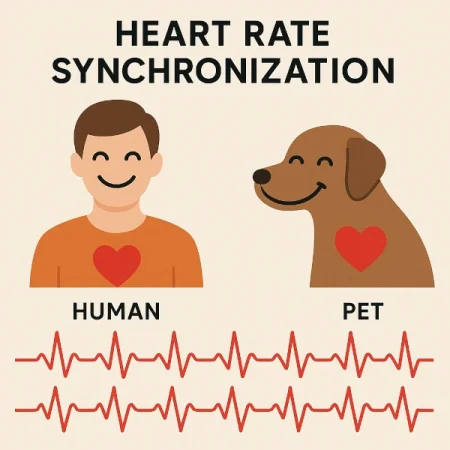
Your pet isn’t copying your behaviour — they’re responding to your nervous system.
Practical Help
How to Support a Pet Who Mirrors You
Once guardians understand emotional mirroring, they’re often relieved to know their pet isn’t “misbehaving” — they’re responding to the emotional field you share. Many clients notice that when they begin regulating their own stress or overwhelm, their animal softens too. Even small shifts in the human’s emotional landscape can create noticeable settling in the pet.
Here are some gentle ways to support your animal if you suspect they’re mirroring you:
Notice patterns — do your pet’s flare-ups or behaviours line up with your stress cycles?
Practise daily check-ins — a few deep breaths or grounding moments can help both nervous systems.
Recognise shared triggers — tension, grief, conflict, or uncertainty can ripple through the home.
Keep veterinary care in place — emotional mirroring is complementary, not diagnostic.
Seek support when patterns feel deep or persistent — you don’t have to navigate the emotional field alone.
When you begin to shift your internal state, your animal often shifts with you.
This is the power of healing together rather than separately.
When the emotional field shifts for the human, the animal often softens too.
Many guardians reach a point where awareness alone isn’t enough — they want a way to understand what their animal is reflecting and how to shift the emotional field they share.
That’s where our work together begins.
OUR METHOD
How We Approach Emotional Mirroring
Many guardians reach a point where awareness alone isn’t enough — they want a way to understand what their animal is reflecting and how to shift the emotional field they share. That’s where our work together begins.
At Animal Communication for Healing, I don’t read your animal for you.
Instead, I guide you into a gentle altered state where you can connect with your pet directly.
This approach allows you to explore:
what your animal is reflecting
how emotional patterns arise within the relationship
what your pet needs to feel safe and settled
how to regulate the shared field between you
how both of you heal together
It’s an empowering process that treats your relationship as a conscious partnership, not a one-way interpretation.
Shift the Emotional Field You Share
The emotional patterns you’ve just learned about aren’t theoretical — they’re already active between you and your animal.
And once you can see them clearly, you’re no longer stuck inside them. You can begin reshaping the entire field you share.
If you’re ready to understand what your pet has been reflecting — and experience the connection in real time — I’d love to guide you.
In 30 minutes, we’ll explore what’s possible when emotional awareness becomes embodied experience — and whether this work is the missing piece you and your animal have been feeling.

About Sharon Burnett
Quantum Healing Facilitator, Qualified Life Coach, Hypnotherapist, NLP Trainer & Meditation Teacher
I’m a Qualified Life Coach, Hypnotherapist, NLP Trainer & Quantum Healing Facilitator and i help people understand the deeper spiritual connections with their animals.
I bridge the gap between science and intuition, between veterinary care and energy healing, between what we can see and what we can feel.
If you’re struggling to understand your pet’s behavior, their health issues, or just the purpose of your bond—I can help.
My work combines consciousness-based animal communication with practical, real-world support. No fluff. No judgment. Just clarity, compassion, and actionable guidance.
Because your animal chose you for a reason.
Let’s figure out what that reason is.
References & Resources
-
- Nagasawa, M., et al. (2015). Oxytocin–gaze positive loop and the coevolution of human–dog bonds. Science, 348(6232), 333–336.
-
- Rizzolatti, G., & Craighero, L. (2004). The mirror-neuron system. Annual Review of Neuroscience, 27, 169–192.
-
- McCraty, R., Atkinson, M., Tomasino, D., & Bradley, R. (2009). The coherent heart: Heart–brain interactions and system-wide order. Integral Review, 5(2).
-
- Beetz, A., Uvnäs-Moberg, K., Julius, H., & Kotrschal, K. (2012). Psychosocial and psychophysiological effects of human–animal interaction: The role of oxytocin. Frontiers in Psychology, 3, 234.
-
- Kerepesi, A., Jonsson, G. K., Miklósi, Á., Topál, J., Csányi, V., & Magnusson, M. S. (2005). Detection of temporal patterns in dog–human interaction. Behavioural Processes, 70(1), 69–79.
-
- Palmer, R., & Custance, D. (2008). Dog behaviour in the presence of owners vs strangers. Applied Animal Behaviour Science, 113(1–3), 103–120.
-
- Custance, D., & Mayer, J. (2012). Empathic-like responding by dogs to human distress. Animal Cognition, 15, 851–859.
-
- Julius, H., Beetz, A., Kotrschal, K., Turner, D., & Uvnäs-Moberg, K. (2013). Attachment to pets: Human–animal relationships. Hogrefe Publishing.
-
- Sheldrake, R. (2011). Dogs that know when their owners are coming home. Random House.
-
- Panksepp, J. (2011). Cross-species affective neuroscience: Empathy & emotional contagion in mammals. Emotion Review, 3(1), 14–15.